




At Palazzo Reale, Flemish genius becomes art and wonder.
At Milan’s Palazzo Reale, more than 80 works tell the story of one of the most fascinating dynasties in European art history. From landscapes and still lifes to popular festivities and exquisitely detailed visions, the exhibition reveals the birth of modern painting genres, and the surprising story of the “Brueghel brand.”
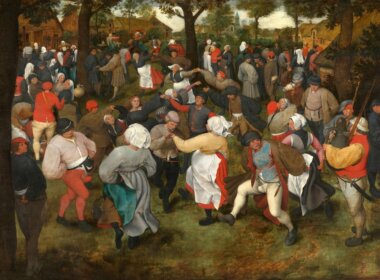
Some families build a dynasty. Others turn their name into a language of its own. The Brueghels belong to the latter. They are at the heart of the major exhibition The Brueghels. The Origins of Painting Genres in Europe, on view at Milan’s Palazzo Reale from September 29, 2026, through January 31, 2027. More than 80 paintings, drawings and prints invite visitors into a story shaped by talent, intuition, taste and the art market, at the moment when painting first encounters a new kind of audience. Conceived by Bernard Aikema and curated by Carlotta Striolo, the exhibition tells the story of much more than a celebrated Flemish dynasty. It captures the moment when European painting began to specialise, giving form to the genres like landscape, still life, scenes of everyday life, battle scenes, that we still use today to understand and classify works of art.

When art becomes a language
It all begins with Pieter Bruegel the Elder, the family patriarch and an artist who inherited the visionary spirit of Hieronymus Bosch only to transform it completely. Where Bosch populated his canvases with demons and allegories, Bruegel turned his gaze towards the earth: snow, mud, festivities, peasants, children. Ordinary people entered painting and became its protagonists. Yet behind this apparent immediacy lay a sophisticated universe, intended for a cultivated audience able to recognise symbols, references and multiple layers of meaning. His art was popular only on the surface; beneath the everyday scenes ran a dense web of meanings. With Pieter Brueghel the Younger, the eldest son and heir to his father’s tradition, the mechanism changed. The family’s most successful subjects were revisited, reinterpreted and produced in numerous variations by a highly specialised workshop. Snow-covered landscapes, peasant celebrations and still lifes became recognisable, and highly sought-after, formulas. Thus emerged the “Brueghel brand”: an early form of branding capable of assuring collectors of a distinctive style, an instantly recognisable visual world and a certain level of quality. Centuries ahead of its time, it anticipated the dynamics of an increasingly sophisticated art market.

Jan. the cosmopolitan Brueghel
If Pieter the Younger consolidated the family’s success, Jan Brueghel the Elder was the one who carried its visual language beyond the borders of the Low Countries. A cosmopolitan, traveller and extraordinary interpreter of Italian culture, Jan spent extended periods in Italy, where he attracted prestigious commissions. Among them was the commission from Cardinal Federico Borromeo, who invited him to Milan in 1595. The city subsequently became one of the key settings in his artistic career. His celebrated Flowers in a Vase, one of the exhibition’s most important loans, embodies the dialogue between Flemish culture and Italian sensibility that would help reshape European taste. Jan also collaborated with artists such as Pieter Paul Rubens, developing increasingly refined themes: earthly paradises, allegories of the Elements and the Seasons, and mythological scenes. He also produced the exquisite cabinet paintings, small copper-panel works of extraordinary precision, created for Europe’s most discerning collectors.

From Milan to Prague: the journey of beauty
The exhibition then follows the international spread of the Brueghelian visual language, from Rome to the court of Rudolf II in Prague, and onward to Antwerp, Amsterdam and Haarlem. Landscapes, peasant scenes and still lifes were reinterpreted by artists such as Roelant Savery, Pieter Stevens and Paul Bril, contributing to the definitive rise of the new painting genres. The Brueghel phenomenon thus emerges for what it truly was: not simply a family story, but a creative system capable of responding to the economic and cultural transformations of seventeenth-century Europe. And perhaps this is precisely what makes the Palazzo Reale exhibition feel so contemporary: the discovery that behind the birth of every artistic genre lies a story of taste, desire and collecting. A story in which talent meets its audience, and beauty inevitably becomes culture.
The Brueghels. The Origins of Painting Genres in Europe will be on view at Milan’s Palazzo Reale until January 31, 2027.
It is an exhibition to savour slowly, allowing yourself to be drawn into the details. Because in the Brueghels’ works, the world is never simply represented. It is staged — with intelligence, elegance and an extraordinary ability to transform life into art.


